WPC Wall Door Manufacturing Approfondimenti Da Un Proprietario Di Una Fabbrica Del Guangdong
Factory Decisions Shape the Finished Space
From an outdoor product designer’s perspective, a Guangdong WPC factory is where an attractive drawing becomes a buildable system. A factory owner has to consider whether the chosen colour can be repeated across production runs, whether a profile extrudes consistently and whether installers can fit every component without awkward site cuts. Those decisions affect the appearance of a courtyard as much as the initial sketch does.
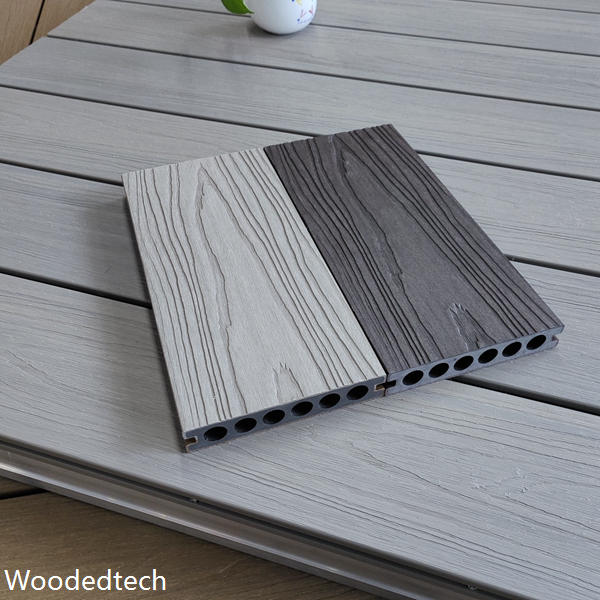
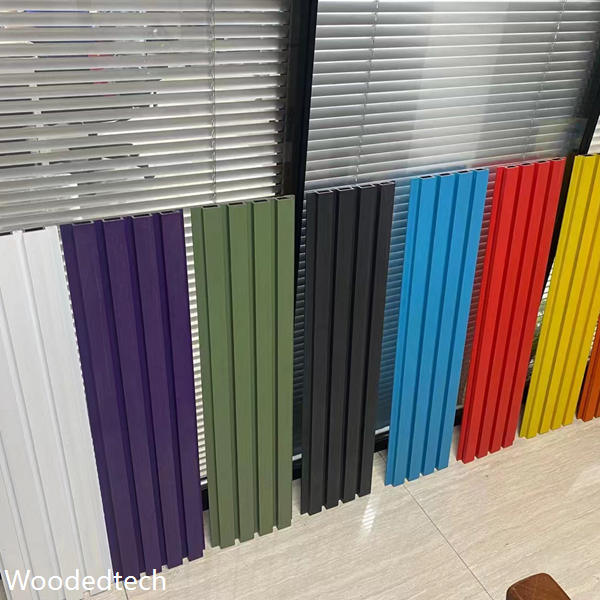
Contemporary outdoor schemes often use a restrained palette across decking, wall panels and screens rather than matching every surface exactly. A warm oak deck can sit beside a darker fence, while slim charcoal trims give both a common edge. I would request physical samples from the intended production specification, then view them upright and flat, in shade and direct sunlight. A small colour chip rarely reveals how a full elevation will read.
Decking Colours and Profiles Define Movement
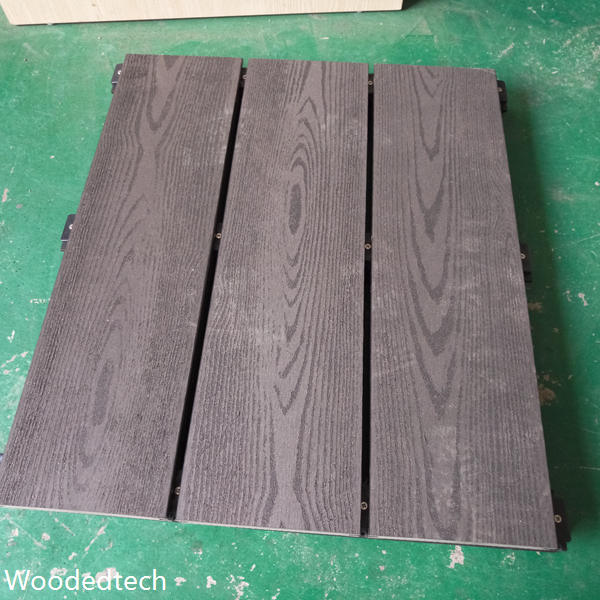
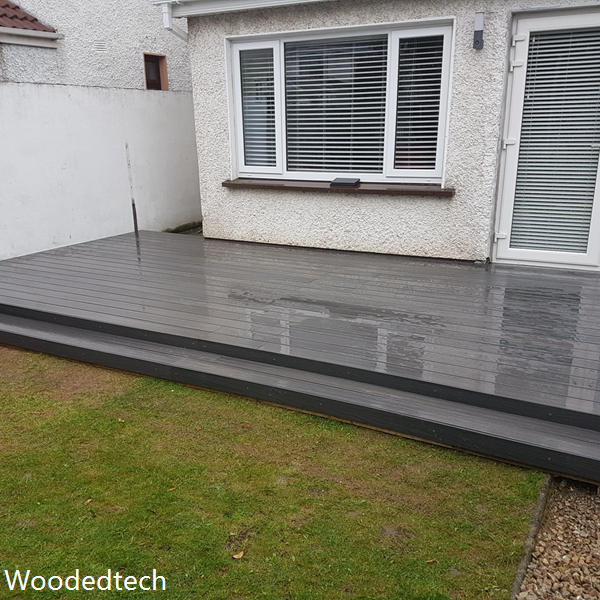
Deck boards do more than cover the ground. Their direction can lead visitors towards a doorway, frame a dining area or make a narrow terrace feel wider. Mid-tone browns soften planted spaces, while cooler greys suit pale masonry and black-framed glazing. Deep embossing adds visible grain, but texture should be assessed underfoot and cleaned on a sample before it is chosen for a busy café terrace.
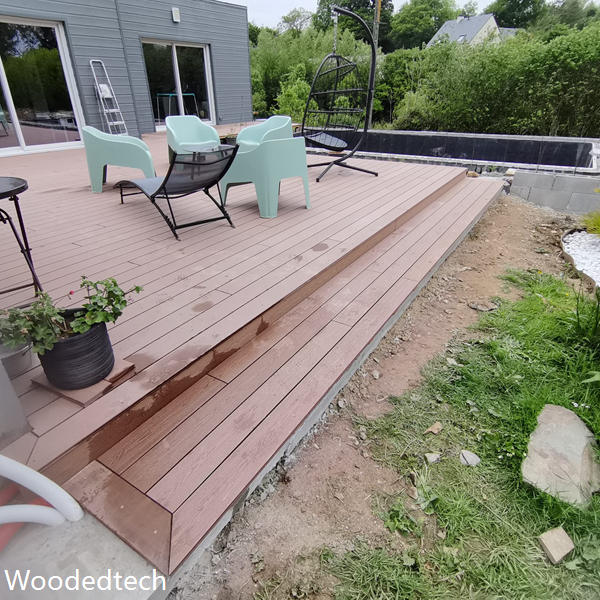
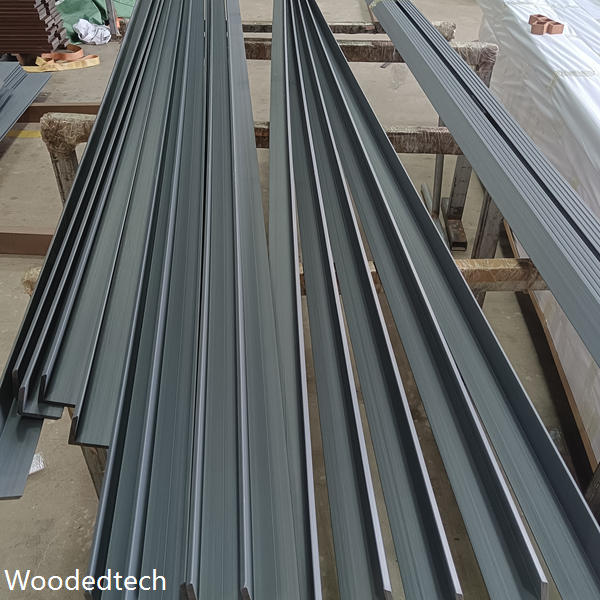
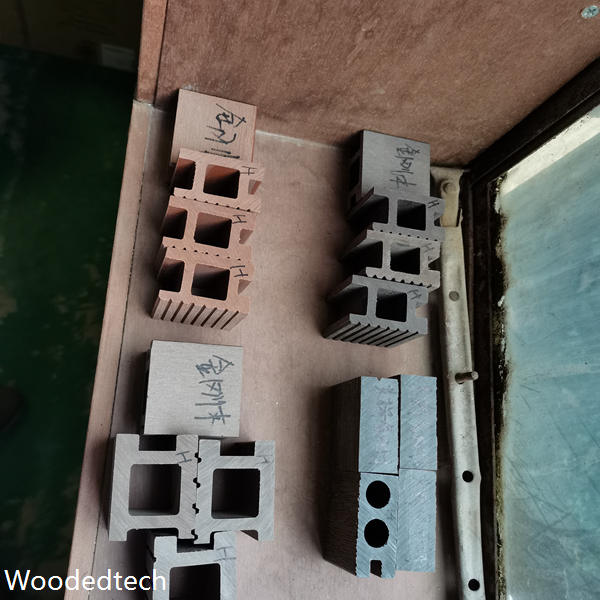
Profile selection has practical consequences. Solid boards may suit exposed edges and detailed steps; hollow profiles can be considered where the manufacturer’s span and fixing guidance permits. Border boards, fascia and end details should be designed alongside the main deck, not ordered afterwards. For modular terraces, repeatable board lengths can reduce cutting and help maintain a regular pattern, provided the layout still allows the movement gaps specified for the product.
Wall Panels and Doors Create a Coherent Elevation
Wall cladding works best when its relief responds to the building. Narrow flutes cast fine shadows on a compact entrance; wider battens give a long garden wall a calmer rhythm. A flat panel can be more convincing beside heavily textured stone than another busy surface. At the factory, consistent rib depth, straightness and colour matching matter because irregularities become obvious when panels meet at eye level.
A wpc wall door detail deserves particular attention where a garden store or service entrance sits within the cladding. Continuing the panel rhythm across the door leaf can make the opening less visually prominent, but the designer must still show its edges, hardware access and clearances accurately. The door’s frame and hinges need to be specified for their loads and exposure; decorative WPC facing should not be assumed to provide structural support.
Fences and Screens Bring Privacy Without Heaviness
Solid fencing can make a small garden feel enclosed. Alternating composite boards with deliberate openings gives a lighter effect while defining a boundary. Vertical slats draw the eye upwards; horizontal courses visually extend a short plot. For hospitality projects, repeating the same screen module around seating bays can give each group privacy without turning the outdoor area into a collection of unrelated enclosures.
Modularity also makes the factory brief clearer. Set out post positions, panel widths, corner conditions and gate openings before approving tooling or quantities. A fence colour may look excellent beside paving yet appear stark against planting, so review the combination as a whole. Specify the supporting posts and fixings separately, and ask for a complete corner and gate mock-up rather than judging a loose board in isolation.
Pergolas and Gazebos Complete the Landscape
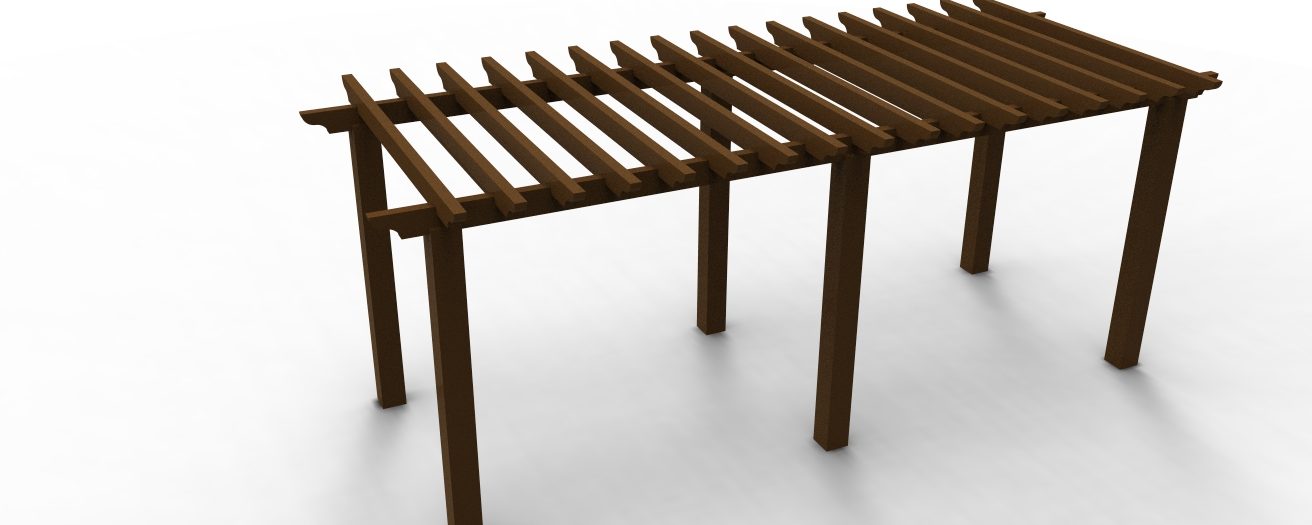
Pergolas establish a ceiling over an open-air room. Slim composite-look members can create a measured pattern of light and shade, especially when their spacing aligns with the deck below. Gazebos need a stronger sense of enclosure, with roof edges, screens and seating considered together. For both, distinguish the visible WPC finish from the engineered structure that carries wind and other loads; the two have different design responsibilities.
The most persuasive landscape schemes repeat a few details thoughtfully. Use the deck’s brown tone on a planter edge, carry a fence’s vertical rhythm into a pergola screen, and reserve a contrasting colour for handrails or door frames. I would ask the Guangdong factory owner for coordinated profile samples, junction drawings and labelled component packs before sign-off. Those modest preparations help the design survive the journey from production line to installation site.