Composite Pergola Rafters Protected Through Export Packaging For Ocean Freight
Formula Design for Composite Pergola Rafters
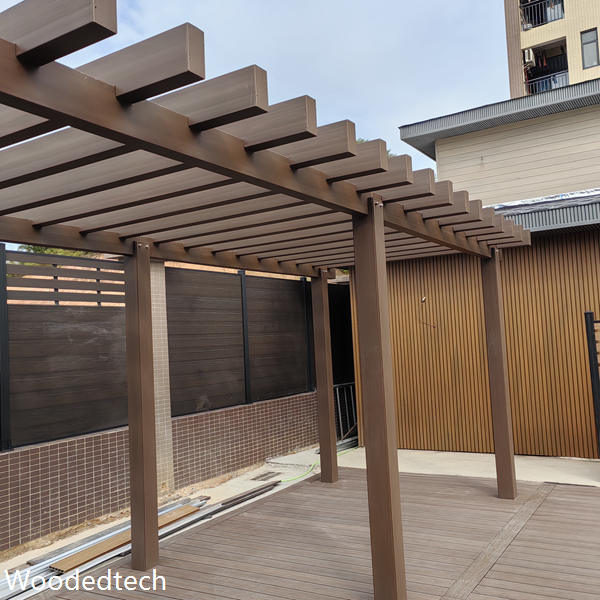
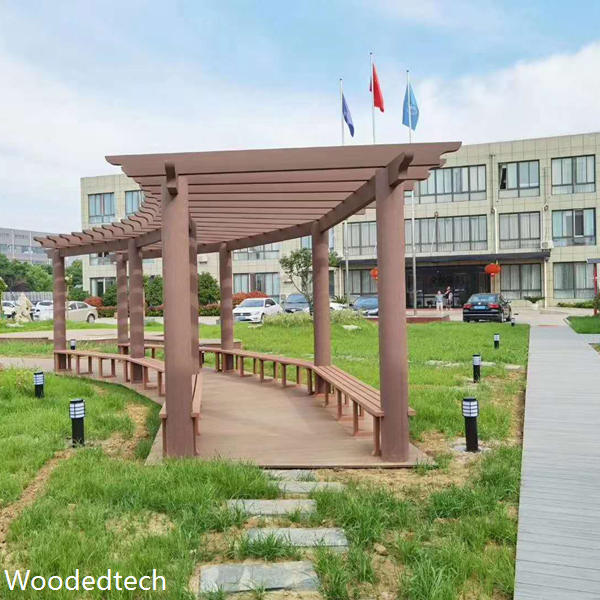
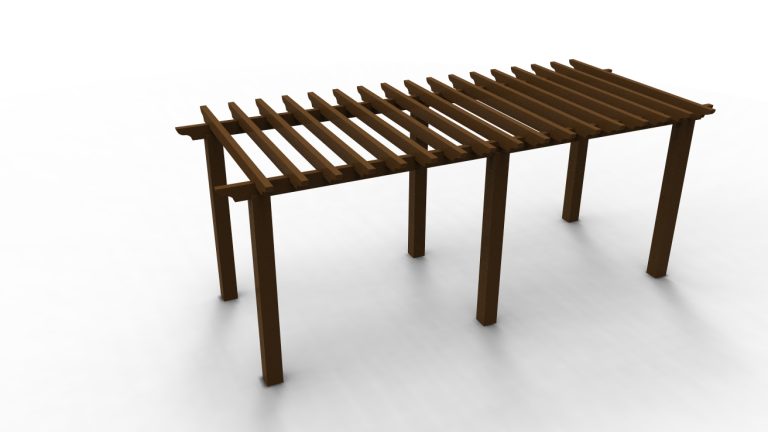
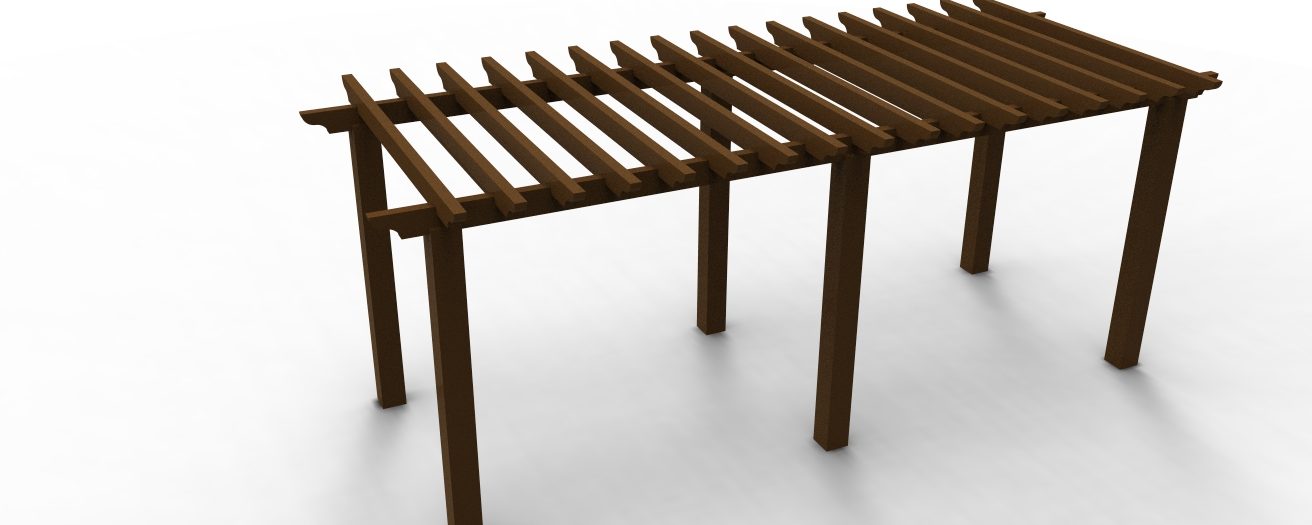
Composite pergola rafters must carry their own weight, support roof battens or shading systems, and remain dimensionally stable through sun, rain and seasonal temperature changes. A high-performance wood plastic composite formula begins with the intended load, span, section profile and installation method. The same formulation used for light decorative wall cladding is not automatically suitable for structural-looking pergola components, fencing rails or landscape beams.
Wood fibre provides stiffness, natural appearance and a lower material cost, while the plastic phase binds the fibres and improves moisture resistance. A formulation containing too much wood may absorb more water, swell at the ends and become difficult to extrude with a consistent surface. Too much plastic can improve processing and water resistance, but it may reduce rigidity, increase cost and create a less convincing wood texture. The correct ratio depends on the product design rather than a fixed recipe.
Balancing Wood Fibre and Polymer Content
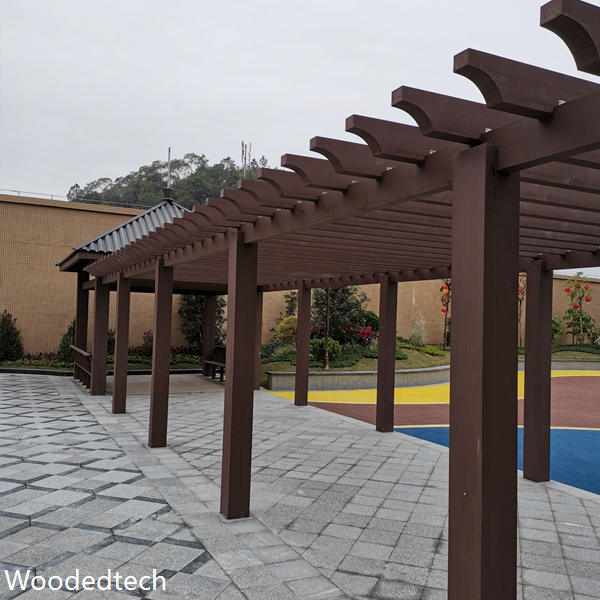
For outdoor decking, wall cladding and fencing, the wood fibre percentage is normally selected alongside the required bending strength, impact performance and surface finish. Higher fibre loading can deliver a firm, natural-feeling profile, but it demands careful fibre drying, particle sizing and coupling treatment. Fibre moisture must be controlled before compounding because residual water can produce voids, foaming, rough surfaces and unstable dimensions during extrusion.
Polyethylene and polypropylene are common matrix materials for WPC products, with each offering different processing temperatures, stiffness and impact behaviour. Recycled polymer may reduce the cost and environmental burden of a product, although its melt consistency and contamination level require inspection. For composite pergola rafters intended for export projects, I would qualify every polymer source through melt flow testing, ash analysis and trial extrusion before approving a production formula. Stable input quality reduces rejection risk at the factory and protects long-term field performance.
Additives That Protect Outdoor Service Life
Additives should be selected for a defined failure risk rather than added indiscriminately. A suitable coupling agent improves adhesion between hydrophilic wood fibre and hydrophobic polymer, supporting strength and reducing water penetration. Lubricants help the compound pass through the die, but excessive lubrication can weaken fibre bonding or cause surface migration. Processing stabilisers protect the polymer during heat and shear, while impact modifiers may be needed for thin fencing components or profiles exposed to handling damage.
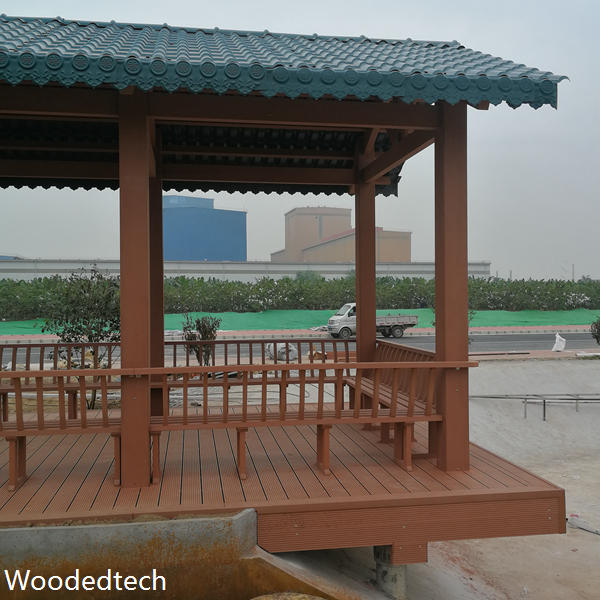
Outdoor products also require protection from ultraviolet radiation, oxidation, mould and moisture. Light stabilisers and UV absorbers can slow colour fading and surface embrittlement, while biocidal protection should comply with the destination market and the product’s intended use. Pigments need good weathering resistance and consistent dispersion, particularly for dark pergola profiles that absorb more solar heat. Laboratory testing should include water absorption, freeze-thaw cycling, accelerated weathering, screw retention, bending strength and dimensional change before a formula is released for commercial production.
Cost Control Without Shortening Product Life
Cost control is strongest when it is linked to performance data. Replacing virgin polymer with a qualified recycled grade, optimising fibre particle size or reducing unnecessary pigment loading can lower compound cost without compromising service life. Cutting coupling agent, stabiliser or UV protection purely to reach a target price often creates delayed failures such as cracking, colour loss, swelling and brittle edges. Those failures are especially expensive in pergola systems because replacement may involve access equipment and labour on completed outdoor installations.
Formula development should therefore compare the full cost of materials, extrusion speed, tooling wear, scrap rate, packaging and warranty exposure. A slightly more expensive recipe may be commercially superior if it runs steadily, produces fewer rejected profiles and survives a longer outdoor test. For decking and landscape products, the formulation must also tolerate drilling, sawing and fastening without excessive chipping. This practical behaviour matters to installation technicians as much as tensile or flexural test results.
Extrusion Quality and Export Packaging
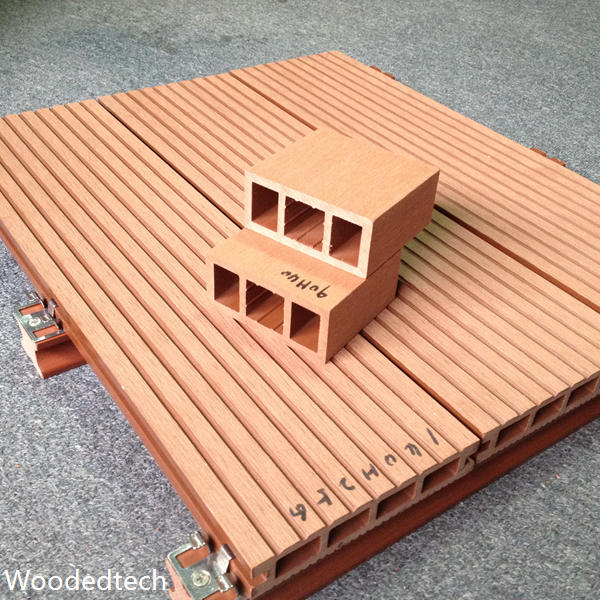
A good formula can still fail if extrusion conditions are poorly controlled. Barrel temperature, screw speed, vacuum calibration, cooling water temperature and haul-off pressure should be matched to the compound’s moisture level and melt behaviour. Pergola profiles need consistent wall thickness and internal support ribs, since variations can create weak points during fastening or ocean transport. Production records should connect each batch to fibre moisture, polymer lot, additive dosage, die settings and final inspection results.
Export packaging must protect composite pergola rafters from abrasion, ultraviolet exposure, salt-laden air and repeated movement inside a shipping container. Profiles should be stacked on level supports, separated with clean protective sheets and restrained without crushing corners. End caps or sealed wrapping can reduce contamination and moisture exchange, while ventilation and desiccant selection should reflect the container route and climate. Packaging engineers should verify compression strength, bundle stability and forklift handling through simulated transport trials. Preserving the profile after it leaves the extrusion line protects the formula investment, installation quality and the buyer’s confidence in the finished WPC system.