How Material Quality Influences WPC Fence Price Lists
Profile Geometry Sets the Starting Price
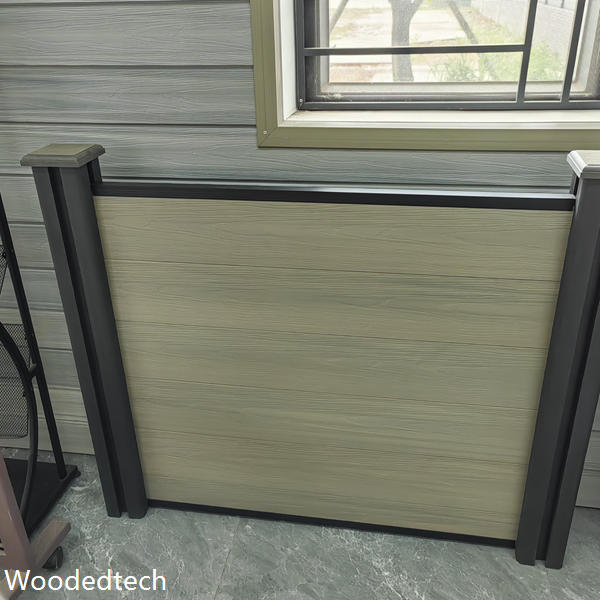
A WPC fence price list reflects far more than resin and wood fibre content. The cross-section of each profile determines how much material is required, how efficiently the extrusion line runs and how the finished fence behaves under wind, impact and daily use. A wide, thick board generally consumes more compound than a narrow privacy slat, while a decorative profile may require a more complicated extrusion die and secondary calibration equipment. These engineering decisions affect both the factory cost and the installation value offered to the buyer.
As a WPC extrusion mold design engineer, I first assess the load path through the profile. A fence board should transfer wind pressure towards the posts and rails without excessive deflection. Sharp internal corners can create stress concentration and restrict material flow, so well-designed sections use controlled wall transitions and consistent thickness. This improves dimensional stability and reduces rejects caused by warping, sink marks or incomplete filling. A profile that looks simple from the outside may therefore contain considerable design work inside the mould.
Hollow Profiles Reduce Weight With Careful Engineering
Hollow WPC fence profiles are often selected to lower weight, material consumption and handling costs. Internal chambers reduce the amount of compound needed while preserving useful bending stiffness, particularly when the outer walls are positioned away from the neutral axis. This makes a hollow board suitable for many privacy and screening applications, provided the chamber arrangement matches the expected span and wind load. Lower weight can also speed up carrying, cutting and positioning on site.
Hollow construction is not automatically economical. Thin walls can deform around screws, crush under clamp pressure or lose shape during hot weather if the ribs and chamber widths are poorly proportioned. The extrusion die must maintain balanced flow through every section, since uneven cooling can twist a long profile. A quality specification should therefore state wall thickness, chamber dimensions, dimensional tolerances and impact requirements rather than describing a product simply as hollow. These details explain why two products with similar external dimensions can occupy very different positions on a wpc fence price list.
Solid Boards Add Mass, Security and Material Cost
Solid WPC profiles use more compound, so their purchase price and transport weight are normally higher. They provide a dense fixing zone and can feel more substantial in locations exposed to frequent contact, vandalism or accidental impact. Solid sections are also useful for short decorative panels, gate infill and areas where a narrow profile must resist concentrated loads. Their mass can reduce vibration and give a premium appearance, although the supporting posts and foundations must be designed for the additional load.
The manufacturing challenge is controlling cooling and shrinkage across the full thickness. If the outer skin solidifies before the centre has cooled evenly, internal stress may cause bowing or later movement. Mould designers use suitable flow channels, calibration settings and cooling lengths to maintain straightness. Buyers comparing quotations should examine density, moisture resistance, screw pull-out strength and long-term colour stability, not just the price per board. A cheaper solid profile can become expensive if it requires more labour, stronger posts or replacement after premature distortion.
Ribs Balance Stiffness and Material Use
Internal ribs allow an engineer to place material where it contributes most to stiffness. Vertical webs can divide a broad hollow board into smaller chambers, while horizontal ribs can support the faces against local impact. The number, height and spacing of these ribs influence bending strength, weight and extrusion speed. Too few ribs may permit face buckling; too many increase compound consumption, raise die pressure and make cooling less uniform.
Rib design also affects installation performance. A screw driven into a well-supported zone is less likely to strip or pull out, especially around hinges, brackets and end caps. Conversely, a rib that sits too close to the surface can cause visible distortion or make cutting difficult. Accurate profiles reduce the need for improvised reinforcement and help installers maintain consistent post spacing. This lowers fitting time, which is an important part of the real project cost even when it is absent from the published wpc fence price list.
Surface Patterns Influence Appearance and Handling
Surface texture is formed through the outer face of the extrusion die or by a later embossing process. Woodgrain patterns, brushed finishes and co-extruded colour layers can hide minor marks and improve visual character, but they add tooling, process control and inspection requirements. Deep patterns may collect dirt or require more cleaning, while an excessively smooth surface can show scratches and fingerprints. The most suitable finish depends on the fence location, the expected maintenance routine and the design language of the surrounding building or landscape.
Pattern depth also affects installation. A strong texture can make it harder to mark cut lines, align boards or identify the correct face, so profiles should include clear orientation features and stable tongue-and-groove dimensions. Consistent surface geometry helps boards engage without excessive force and allows expansion gaps to remain predictable. For export projects, profile drawings should record face direction, tolerances, colour references and packaging limits. These technical details help sales teams compare suppliers accurately and help installers receive a product whose material quality supports the price shown on the quotation.