How Raw Materials Shape WPC Production Quality and Durability
Raw Material Selection Sets the Quality Baseline
As a quality inspection supervisor, I assess outdoor WPC products as a chain of linked decisions rather than as finished boards alone. Wood flour, polymer resin, coupling agents, pigments, lubricants and stabilisers each affect the final product. Wood flour with inconsistent particle size can create weak zones and an uneven surface. Excess moisture may generate bubbles, voids and poor bonding during extrusion. Recycled polymer can support a lower-impact product, but it must be sorted, cleaned and checked for contamination before entering the formulation.
Raw material inspection begins with supplier documentation, sampling and laboratory checks. Moisture content, ash content, melt flow behaviour, particle size distribution and resin compatibility are recorded against the approved specification. During wpc production, the correct blending ratio must remain stable from batch to batch. A formula that changes slightly may still produce attractive boards, yet density, colour, screw holding and weathering performance can shift noticeably. Traceability therefore matters as much as the test result itself, because every finished batch must be linked to its raw material lots and processing records.
Verificación de precisión y densidad dimensional
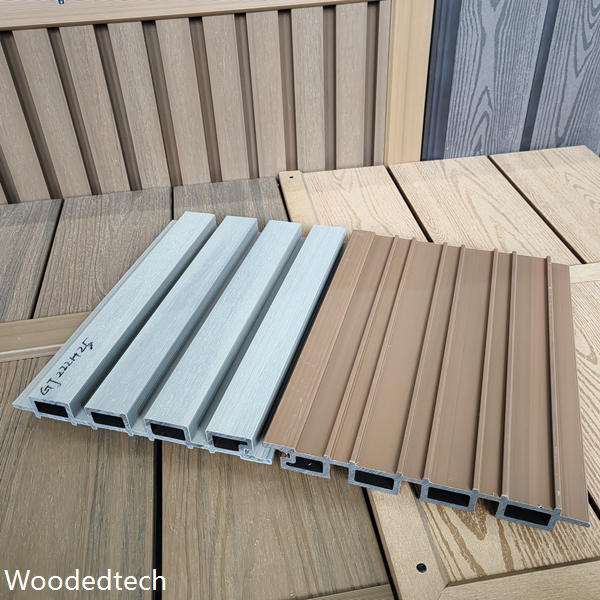
After extrusion and cooling, inspectors measure board length, width, thickness, straightness and profile geometry. Measurements are taken at defined positions rather than at one convenient point, since cooling shrinkage and die pressure can produce variation along the board. Calibrated callipers, steel rules, profile gauges and straight edges are used according to the product specification. Excessive thickness variation may cause installation gaps, uneven fastening and visible changes in surface level, particularly on long decking runs or large façade areas.
Density is checked by measuring mass and volume, with samples taken from different sections of the production run. A low-density board may contain internal voids and offer reduced screw retention or impact resistance. Excessive density can indicate an incorrect formula, over-compaction or insufficient foaming control, adding weight without guaranteeing better durability. Density results are compared with dimensional data and cross-sectional observations, so a board is not accepted merely because its average weight falls within a target range.
Resistencia al impacto y fuerza de flexión
Outdoor products must withstand dropped tools, furniture movement, transport handling and occasional concentrated loads. Impact testing uses a controlled striker or falling weight applied to a defined area of the sample. Inspectors record cracking, surface fracture, delamination and permanent deformation. Testing the face, edge and fastening zone is useful because these areas respond differently. A board that survives a central impact may still chip easily at an unsupported edge if the polymer and wood fibres are poorly bonded.
Bending strength tests show how a profile behaves across a known span under a steadily increasing load. The test records the load at failure, deflection and the appearance of cracks around hollow chambers or ribs. Results depend on material composition, extrusion temperature, cooling conditions and profile design. Long decking boards, railing components and cladding profiles require particular attention to stiffness and support spacing. Dimensional checks and bending results are reviewed together, since a warped or undersized profile may pass a load test in the laboratory but perform poorly during real installation.
Rendio de absorción de agua y desgaste
Water absorption testing measures the change in mass after samples are immersed for a specified period. Low absorption generally indicates effective polymer encapsulation, suitable wood flour preparation and sound fusion during extrusion. High absorption may reveal open pores, poor interfacial bonding, excessive wood content or damaged end sections. Inspectors also examine swelling in thickness and changes in appearance after immersion, because dimensional movement can affect joints, clips and drainage details.
Colour stability is assessed through accelerated ultraviolet exposure, heat and moisture cycling, followed by comparison with an approved colour standard. Instruments can measure colour change, while visual panels reveal chalking, fading, gloss loss and uneven pigment distribution. UV stabilisers and pigments must be correctly dosed, but good weathering performance also depends on the dispersion of additives through the melt. Products intended for strong sunlight, coastal locations or commercial landscaping should be tested against the exposure conditions expected in their target market rather than judged only by a short indoor observation.
Appearance Inspection Before Shipment
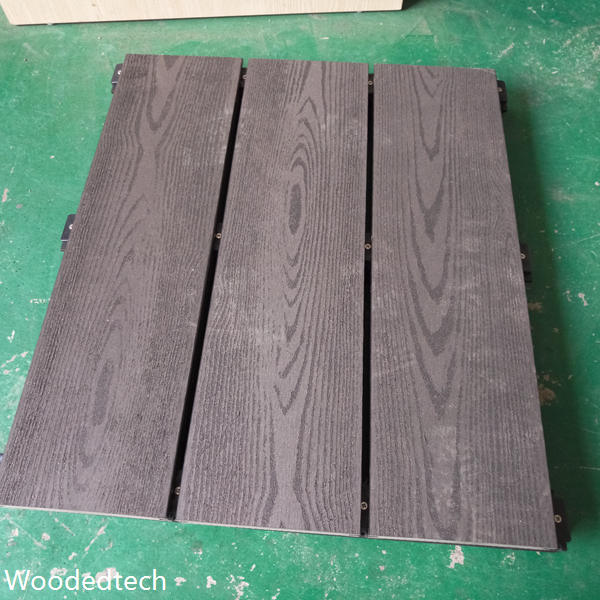
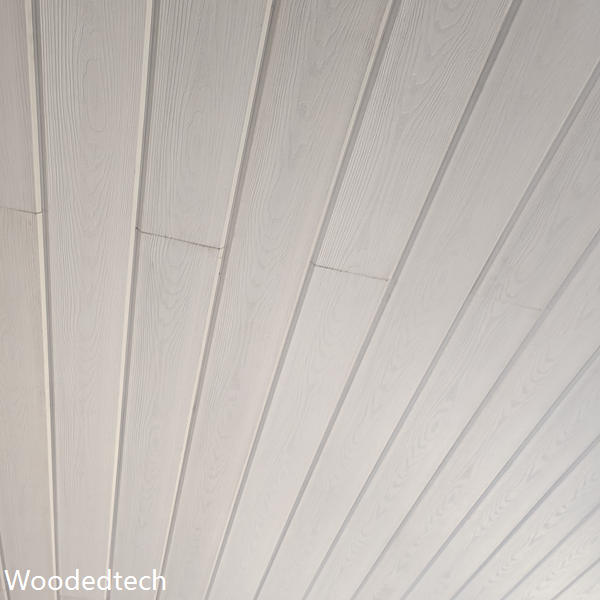
Final appearance inspection is conducted under consistent lighting and viewing distance. Inspectors check colour uniformity, surface texture, wood grain effect, gloss, edge finish, end cuts, holes, scratches, sink marks, black specks, bubbles, die lines and contamination. Small variations may be acceptable in a natural-looking product, but they must remain within the approved master sample. Repeated streaks or sudden shade differences often indicate a mixing, temperature or raw material issue and require review of the production records.
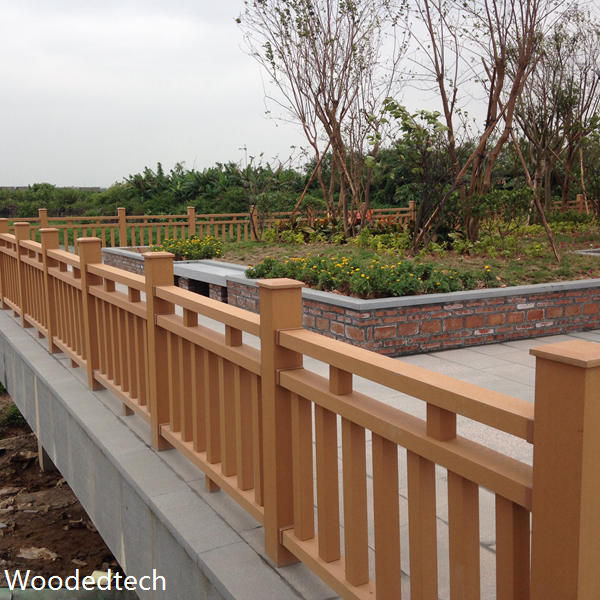
Before release, inspection results are matched with the purchase order, packaging specification and sample approval. Random cartons are opened to verify labelling, quantity, profile orientation and protection of finished surfaces. Boards that pass appearance checks but fail dimensional, density, impact, water absorption or strength requirements are held for investigation rather than shipped. This disciplined release process gives designers, installers, distributors and overseas buyers confidence that outdoor WPC products will retain their intended fit, finish and service performance after leaving the factory.