WPC-Flötplatte Für Außen: Verpackungsdesign Für Meertransportschutz
Design Intent Must Survive the Voyage
A wpc fluted panel for exterior use is often chosen for the rhythm of its shadow lines. On a contemporary facade, narrow flutes can soften a broad elevation, while deeper profiles give a garden room or boundary wall a stronger architectural presence. That effect depends on consistent edges, clean surfaces and panels that arrive straight. Packaging is therefore part of the design specification, especially when the material will spend weeks at sea before installation.
Outdoor schemes increasingly use a coordinated family of composite decking, wall panels, fences, pergolas and gazebos. Designers may repeat a warm timber tone across these elements, then vary the texture and profile to distinguish walking surfaces from vertical screens. If a shipment arrives with rubbed corners or mismatched bundles, that careful composition becomes difficult to deliver. A useful packaging brief starts with the finish, panel dimensions and intended installation sequence, not simply the number of pieces per carton.
Protecting Flutes, Edges and Surface Finishes
Fluted profiles need support across their full width. Point pressure from tight strapping can flatten raised ribs or leave marks on darker, brushed finishes. I specify rigid edge guards beneath straps, flat interlayers between panel faces and a stable base that prevents the pack from sagging. Protective film may suit smooth coextruded surfaces, but its adhesive should be tested against the actual finish and expected shipping temperature before it is used on a full order.
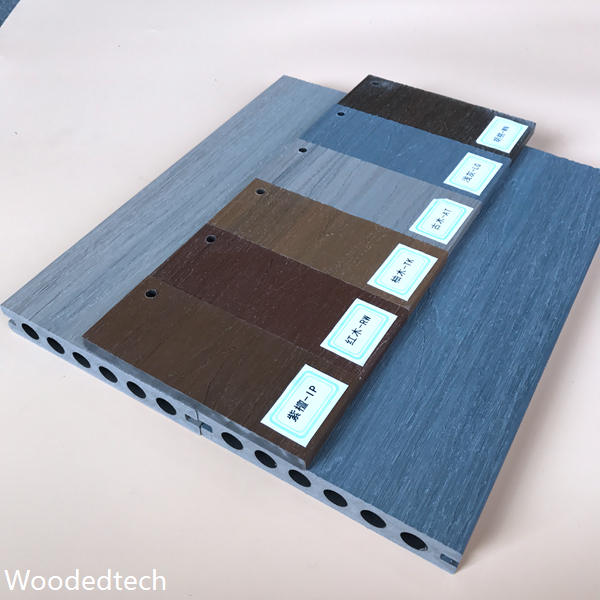
Colour choices affect how damage is perceived. Pale greys and muted oak shades suit restrained coastal gardens, yet shipping dirt can show clearly on them. Charcoal panels create crisp contrast beside planting and paving, but scuffs catch the light across their flutes. Packaging trials should include each surface type, with inspection under angled light. Keep accessories and metal fixings in separate, secured cartons so they cannot work loose and scratch decorative faces during transit.
Moisture Control Without Trapping Water
Composite panels tolerate outdoor conditions, but prolonged contact with standing water inside a pack is still undesirable. Damp cartons lose strength, labels become unreadable and mixed loads may transfer stains to finished surfaces. Wrap bundles to resist spray and condensation while allowing the protection system to manage moisture. Dry panels and pallets before packing, and use suitable moisture absorbers where the route, season and container conditions justify them. A sealed wet bundle merely carries the problem to the destination.
Ventilation and weather protection need particular attention for hollow profiles. Their cavities can retain water if open ends face a leak or sit against a wet pallet. End protection should cover exposed channels without crushing the profile, while the outer pack should shed incidental water. Timber pallets must meet the importing market’s treatment requirements. Confirm those requirements early, since repacking a finished order at the port risks damaging precisely the edges the packaging was designed to preserve.
Container Loading for Modular Outdoor Projects
Modular design makes complex landscapes easier to build: standard panel lengths can align with fence bays, pergola screens and gazebo walls, while matching decking establishes a consistent ground plane. It also simplifies export packing when bundles are grouped by elevation, finish and installation phase. Clear, durable labels should identify the profile, colour, length, batch and destination area. Installers can then unload the materials they need without repeatedly opening and restacking every pack.
Inside the container, pallet dimensions should suit the usable floor space and the handling equipment at both ends of the journey. Loads need restraint against movement, with weight distributed according to the carrier’s requirements. Do not stack heavy decking packs over delicate fluted wall panels simply to fill height. A loading diagram and photographs of the secured container provide a practical record for the factory, freight team and receiving contractor. They also make damage claims easier to assess if a problem occurs.
Inspection and Unpacking at the Site
Good packaging remains useful after the container doors open. Mark the correct lifting points, protect long packs from excessive overhang during unloading and keep finish labels visible until installation. The receiving team should check the outer wrap, count bundles and photograph any impact marks before moving materials into storage. Open a sample of each finish and batch promptly, inspecting flute peaks, board ends and colour consistency against the approved sample.
For a designer, that final check protects more than the shipment value. Consistent profiles allow fence runs to meet neatly at corners, fluted screens to cast even shadows beneath pergolas, and wall panels to sit comfortably beside decking and planting. Store accepted material level, off the ground and under suitable cover until it is fitted. When the packaging plan follows the design from factory to site, the finished outdoor space can retain the precise colour, texture and geometry that made the specification worthwhile.