Are Composite Decks Worth the Money? A Factory Quality Test
Factory Quality Starts with the Raw Material
Are composite decks worth the money depends less on the board’s appearance in a showroom and more on how consistently the manufacturer controls raw materials. As an international sales manager for a Chinese outdoor WPC manufacturer, I advise overseas buyers to begin with the formulation. A reliable factory should state the ratio of wood fibre, polymer, additives and pigments, rather than describing the product only as “high quality” or “eco-friendly”. The wood flour should have controlled moisture content and particle size, while the polymer grade must suit the intended extrusion temperature and outdoor exposure.
Ask the supplier whether each production batch is recorded and traceable. Recycled polyethylene or polypropylene can be suitable, but uncontrolled recycled feedstock may contain incompatible plastics, moisture or contaminants. These issues can cause weak bonding, surface bubbles, colour variation and premature cracking. Request material specifications, safety data where relevant, and recent batch records. A factory that can explain its formulation and testing process is generally easier to evaluate than a trading company that simply forwards catalogue images.
Extrusion Controls Reveal Supplier Reliability
WPC decking is formed under heat and pressure, so extrusion control directly affects the finished board. During a factory audit, inspect the production line and ask how the supplier manages temperature zones, screw speed, cooling, embossing and cutting. Stable settings are needed to maintain board thickness, density, profile shape and surface texture across a long production run. The appearance of one sample cannot prove consistency across a container order.
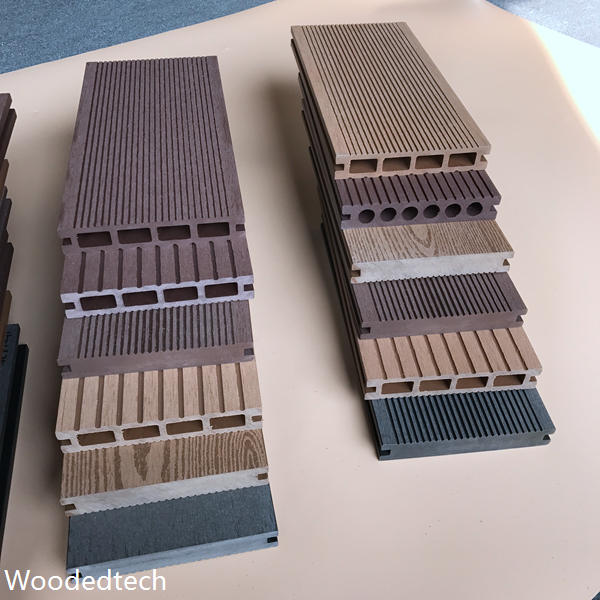
Buyers should compare several boards from different batches, not just one polished sample. Measure thickness, width, length and weight, then check whether the tongue-and-groove or clip channel remains accurate along the full board. Excessive dimensional variation can create installation gaps and uneven alignment. Examine the cut ends for voids, poor mixing or delamination. A dependable manufacturer should be willing to produce samples using the same formulation and process planned for mass production.
Performance Tests That Matter Outdoors
Outdoor WPC products face ultraviolet radiation, rain, humidity, temperature changes, foot traffic and occasional impact. Factory testing should therefore cover water absorption, density, flexural strength, screw holding, surface wear and colour stability. For projects in hot or humid climates, buyers should pay particular attention to thermal expansion and moisture-related movement. Test methods and acceptance limits should be written into the purchase specification, with the laboratory or equipment used clearly identified.
Weathering results require careful interpretation. A short indoor exposure test cannot represent years of sunlight, and an attractive colour sample says little about fading resistance. Ask for accelerated weathering data and clarify the exposure cycle, test duration and grading method. Fire performance, slip resistance and load requirements may also apply to public, commercial or elevated installations. The correct test depends on the destination market and application, so the supplier should help match documentation to local building requirements rather than offering generic certificates.
Confirm Specifications Before Placing the Order
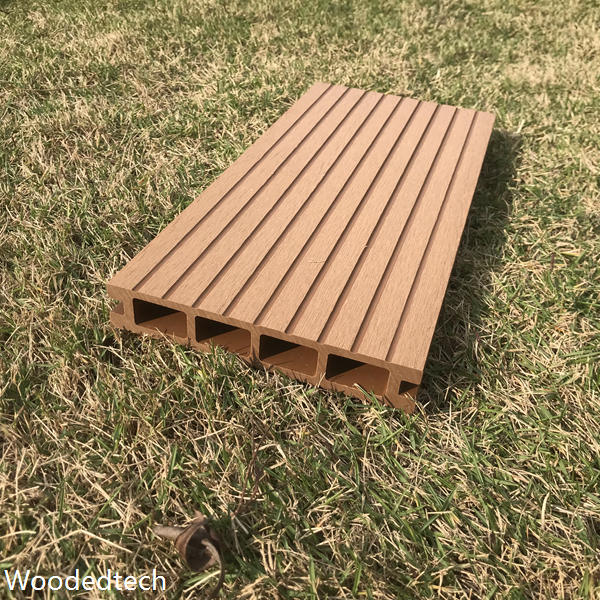
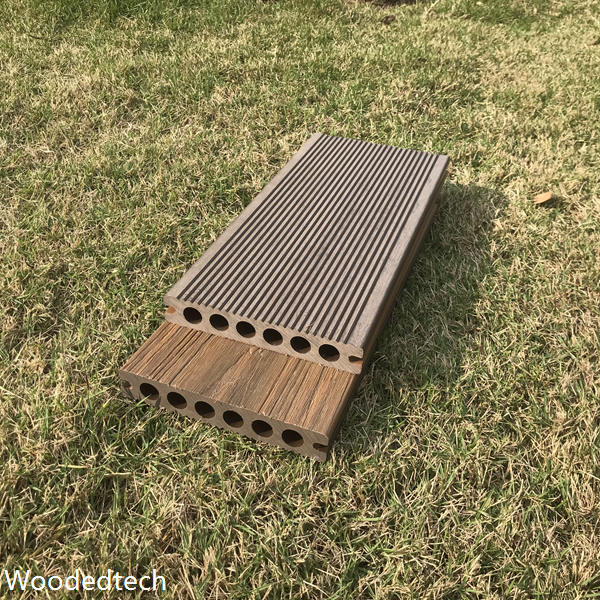
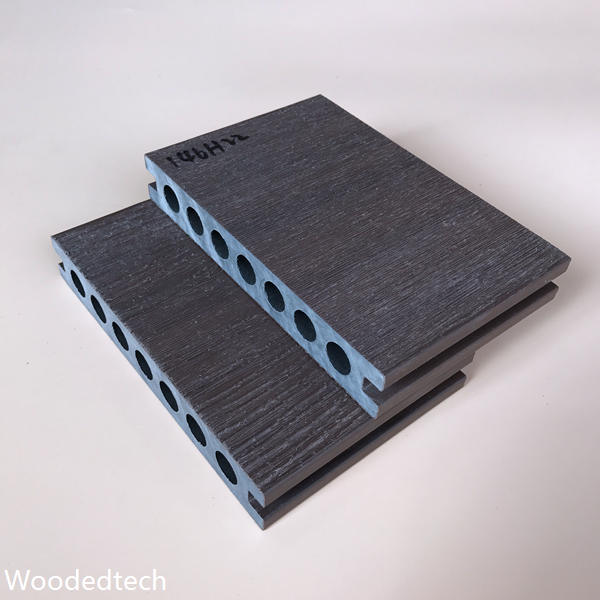
Many purchasing disputes begin with vague specifications. The contract should identify board dimensions, tolerance, profile design, surface finish, colour reference, core composition, packaging method and acceptable defect limits. It should also state whether the board is solid, hollow or co-extruded, because these constructions have different weight, cost, fastening requirements and resistance to moisture. Colour should be approved from a production sample under a defined lighting condition, not from a digital image.
For overseas buyers, packaging and container loading deserve the same attention as the board itself. Confirm the number of boards per carton or pallet, gross weight, pallet dimensions and moisture protection. Ask how the factory prevents edge damage during transport and whether replacement boards are included for large projects. A pre-shipment inspection should check quantity, dimensions, colour, surface quality and packaging against the approved sample. Payment terms can then be linked to documented inspection results, reducing disagreement after the goods leave China.
Factory Capability Protects Long-Term Project Value
Price is only one part of the answer to whether are composite decks worth the money. A low quotation may reflect lighter density, lower polymer content, weak additives or limited quality control. Compare the delivered cost with expected service life, installation labour, maintenance requirements and the cost of replacing failed boards. A slightly higher purchase price from a controlled factory can be commercially sensible if it reduces colour complaints, site delays and warranty claims.
Assess the supplier’s engineering and after-sales capability before committing to a long-term programme. The factory should provide installation guidance, suitable clips and screws, maintenance instructions and technical responses in a reasonable time. For OEM projects, confirm mould ownership, tooling charges, colour development procedures and minimum order quantities in writing. Reliable Chinese WPC manufacturers welcome technical audits, retain production samples and communicate clearly about limitations. That transparency gives architects, distributors and contractors a sounder basis for selecting decking that performs as specified in its export market.