Composite Decking Board Lowe’s Buyers: What Guangdong Factories Deliver
What Composite Decking Board Lowe’s Buyers Expect
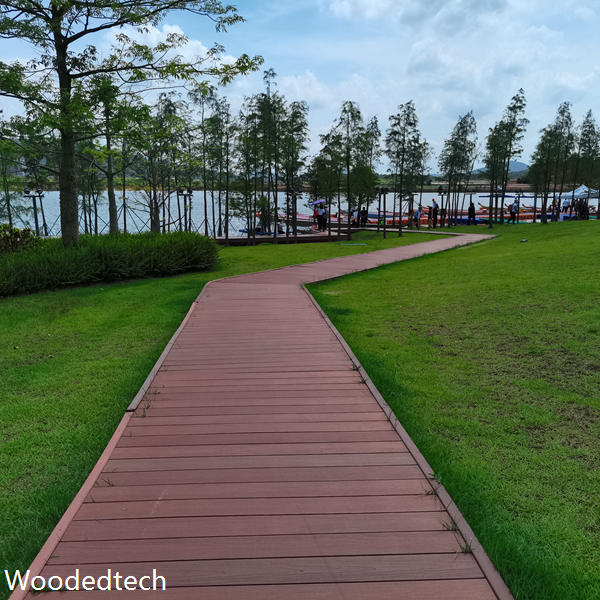
Architects and landscape designers choosing an outdoor WPC surface need more than an attractive colour sample. A successful deck must tolerate rain, ultraviolet exposure, repeated foot traffic, furniture movement and seasonal temperature changes while remaining comfortable and visually consistent. This is why buyers searching for composite decking board lowes often compare factory specifications with the practical demands of a real project. Guangdong manufacturers supply boards made from wood fibre, recycled polymer and performance additives, with product ranges suited to residential terraces, hotel gardens, pool surrounds, balconies and public landscape schemes.
The most useful factory partner can explain the complete material formula rather than quoting only a nominal wood plastic composite ratio. Recycled polyethylene or polypropylene affects flexibility and moisture resistance, while wood fibre influences texture, colour stability and thermal movement. Calcium carbonate, lubricants, pigments and ultraviolet stabilisers must be balanced carefully. For a landscape project, the right board is the one whose formulation, profile and surface finish match the site conditions, expected loading and maintenance plan.
Board Profiles for Outdoor Landscape Projects
Guangdong factories commonly offer solid, hollow and co-extruded decking profiles. Solid boards provide a reassuring sense of mass and can be useful for busy hospitality areas, steps and locations where edge visibility matters. Hollow boards reduce weight and material consumption, which may simplify transport and installation on raised structures, although their internal webs must be designed accurately to prevent crushing around fasteners. Co-extruded boards add a protective outer layer that improves resistance to staining, fading and moisture penetration.
Profile selection should follow the structure beneath the deck. Designers need to check board span, joist spacing, clip dimensions and permissible deflection together. A board that looks substantial may still require close joist centres in a commercial setting. Factories should provide section drawings, installation tolerances and recommended support spacing. They should also confirm whether the profile is reversible, grooved on one side, or intended for a particular concealed fixing system, because these details affect both appearance and site productivity.
Colour, Texture and Heat Performance
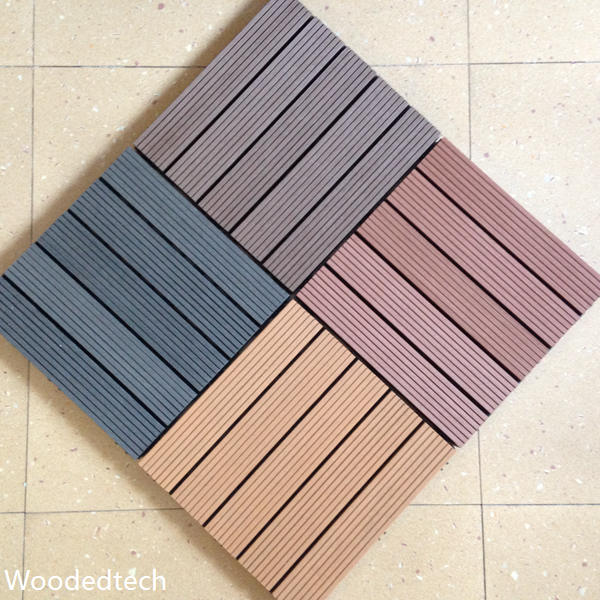
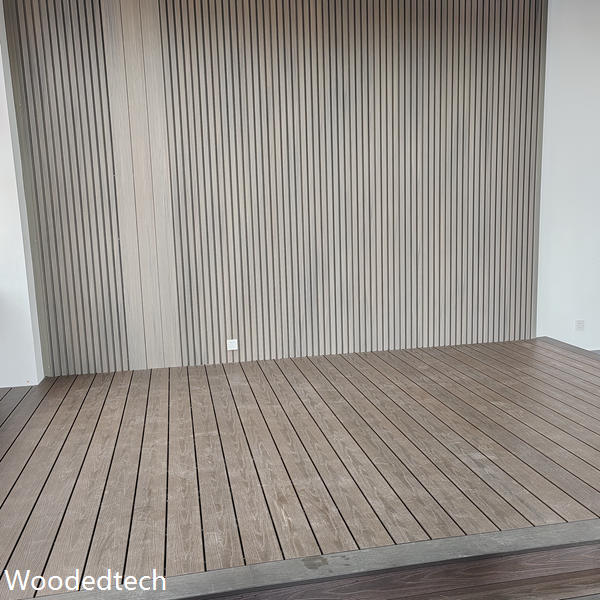
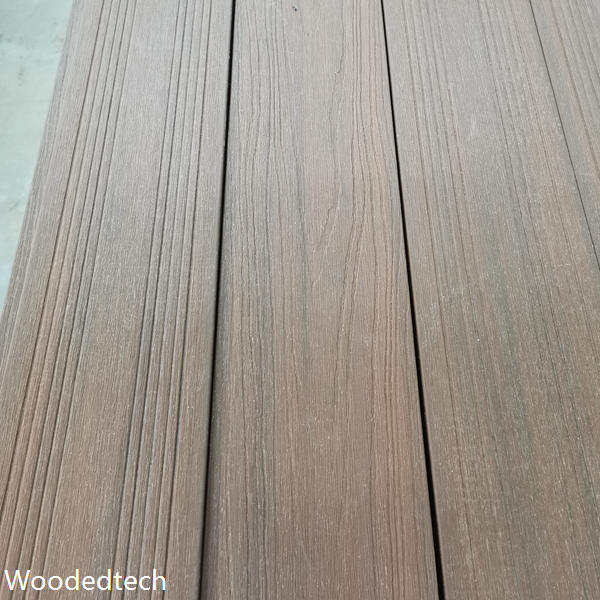
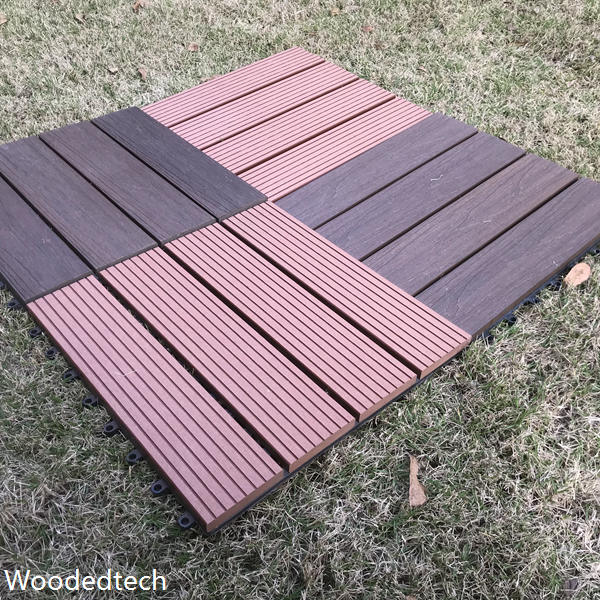
Outdoor WPC design is often judged by how naturally it sits within planting, paving, water features and building façades. Guangdong suppliers can produce woodgrain embossing, brushed finishes, narrow grooves and multi-tone co-extrusion. Architects should request physical samples because printed images rarely show the relationship between grain depth, sheen and colour variation. Dark brown and charcoal boards can create a refined contemporary setting, but they may become hotter in direct sun than lighter grey, tan or natural timber shades.
Heat performance deserves attention around swimming pools, roof terraces and playground-adjacent seating. Surface temperature depends on colour, solar exposure, ventilation and local climate, so manufacturers should share test information where available. Drainage also matters. A board with a suitable groove pattern can help move water away, but the subframe must be levelled correctly and the deck perimeter should allow air circulation. Good design reduces algae retention and makes routine cleaning more effective.
Quality Checks Before Factory Approval
Sample approval should cover more than colour. A professional buyer should inspect board straightness, dimensional consistency, surface bonding, edge quality and the fit between boards and clips. Ask for water absorption, flexural strength, slip resistance, weathering and fire performance data where the building specification requires it. Independent laboratory reports are valuable, but the production batch must also be checked against the approved sample. A factory quality control engineer should be able to describe incoming material checks, extrusion temperature control, embossing inspection and final packing procedures.
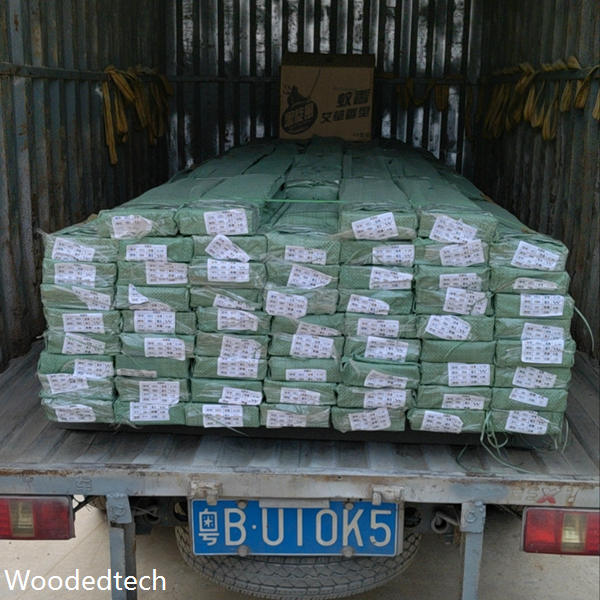
For export orders, packaging affects the condition received on site. Boards need protection from abrasion, moisture and distortion during container transport. Length tolerances should be recorded clearly, particularly when a project uses repeated modules or precise border details. It is also sensible to order spare boards from the same colour batch for future repairs. A capable supplier can advise on production lead time, container loading, replacement quantities and documentation for international customs clearance.
Installation Details That Protect Long Term Value
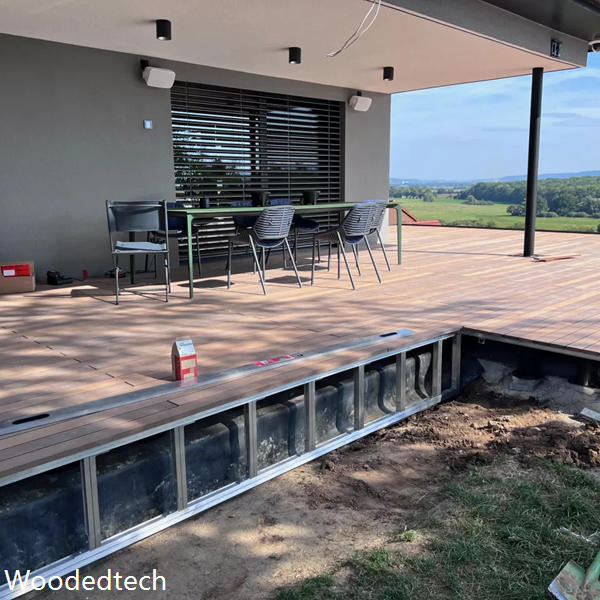
Even a well-made WPC board can fail if the installation method ignores expansion, drainage or ventilation. The subframe should be stable, aligned and separated from standing water. Installers need to follow the factory spacing for clips, screws and joists, leaving the specified end gaps for temperature movement. Fixed points and sliding points should be arranged according to the profile design, especially on long runs exposed to strong sun. Boards should never be tightly forced together to correct an inaccurate subframe.
For architects and landscape consultants, a clear maintenance schedule should be part of the handover. Regular sweeping removes grit that can abrade the surface, while prompt cleaning limits staining from food, leaves and soil. Furniture feet should be protected, and snow, salt or chemicals should be removed using products approved by the manufacturer. When Guangdong production quality is matched with an accurate specification and disciplined installation, composite decking can provide a stable, low-maintenance surface that supports attractive outdoor environments for many years.