قائمة التحقق من اختبار WPC للشاحنات الجاهزة للشحنات في الهواء الطلق
Production Planning For Shipment-Ready Outdoor Profiles
At our Guangdong outdoor WPC factory, shipment quality begins before an extruder WPC line is started. Production management first checks the confirmed order, profile drawings, colour references, surface requirements, packing method and destination regulations. Each export order receives a production schedule linked to raw material preparation, tooling, extrusion, inspection and loading dates. This gives the sales and logistics teams a realistic delivery commitment instead of relying on an optimistic machine estimate.
We also group orders according to profile size, colour family and surface finish. This reduces unnecessary die changes, purging material and cleaning time. Resin, wood fibre, additives and colour masterbatch are issued against a batch record, allowing the purchasing and cost control teams to track consumption accurately. Stable formula control is particularly important for international buyers because a small colour or density difference can become visible when boards from different production runs are installed together.
Extruder WPC Start-Up And Process Checks
Before mass production, the operator inspects the extruder, hopper, heating zones, cooling system, haul-off, embossing unit and cutting equipment. Barrel temperatures are checked against the approved process sheet, while screw speed, feeding rate, vacuum pressure and line speed are recorded during start-up. The first profiles are not released simply because their dimensions look acceptable. They must also show a consistent surface, proper wood-plastic fusion, clean edges and stable output without burning, bubbles or unmixed particles.
The production supervisor keeps a retained sample from the approved start-up section and records the machine number, formula batch, die reference and operator. This sample becomes a practical comparison for the full run. If output begins to vary, the team can identify whether the cause is moisture in the wood fibre, feeding instability, temperature fluctuation, die wear or cooling imbalance. Fast identification prevents a minor process deviation from becoming several tonnes of non-conforming material.
Dimensional And Appearance Inspection
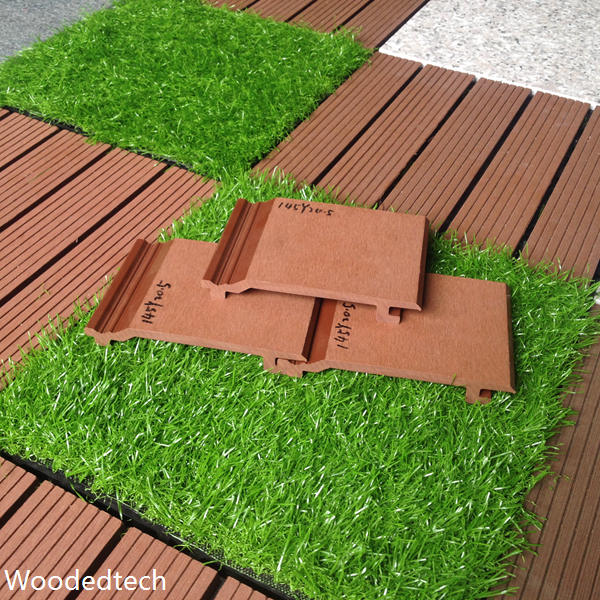
Every outdoor profile is measured against the order drawing, including width, height, wall thickness, length, hole position and permitted tolerance. Calibrated callipers, gauges and length measuring tools are used at defined intervals throughout production, not only at the final inspection. Hollow profiles receive additional checks for internal blockage, uneven wall thickness and deformation after cooling. For decking, fencing and pergola components, straightness and end squareness are recorded because small deviations can create installation difficulties on site.
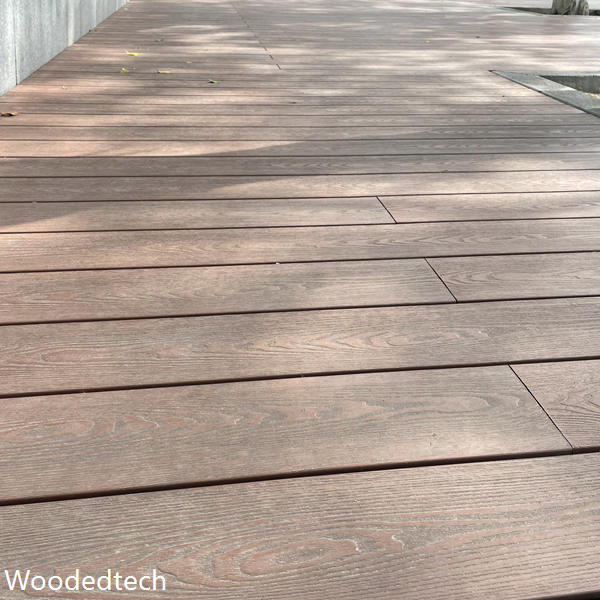
Appearance inspection covers colour uniformity, grain embossing, gloss, scratches, edge quality and visible contamination. Inspectors compare the profile under consistent lighting and use approved colour samples rather than personal judgement. The factory also checks whether the surface remains stable after cutting and drilling. A board that looks acceptable before processing but shows cracking at the cut end is not suitable for shipment, particularly for projects where installers have limited time to replace damaged pieces.
Performance Testing Before Release
Shipment-ready profiles require more than attractive appearance. Depending on the product specification, our quality team tests density, moisture content, water absorption, dimensional change, flexural behaviour, impact resistance and screw-holding performance. Samples may be conditioned before testing so that results reflect the temperature and humidity conditions expected during international transport and outdoor use. For decking and structural-looking profiles, load testing helps confirm that the approved formula and wall design remain consistent across the batch.
Accelerated weathering, colour retention and slip-related testing are arranged according to the target market and project requirement. Test records identify the sample batch and production date, creating traceability if a customer asks for technical evidence months later. We separate routine factory checks from third-party certification requirements, since both may be needed for construction tenders, distributor approvals or local compliance documentation. Any failed result triggers a hold on the affected batch until the technical team determines whether rework, sorting or rejection is appropriate.
Cost Control, Packing And Export Handover
Production efficiency is measured through usable output, material yield, machine utilisation, rework rate and energy consumption. These figures help us control the real cost of each profile rather than focusing only on raw material prices. Offcuts are recorded, and recyclable process waste is handled according to the approved internal procedure. Preventive maintenance is scheduled around confirmed orders to reduce emergency downtime, while spare dies and wearing parts are prepared before high-volume runs.
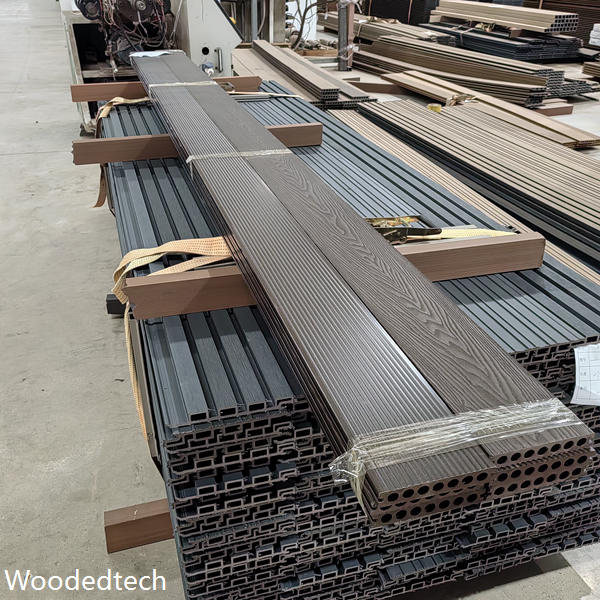
After final inspection, profiles are bundled according to the packing list, with protective film, corner protection, moisture control and pallet support selected for the transport route. Each package carries the product code, quantity, batch number and destination marks. Before loading, warehouse staff compare the physical count with the commercial invoice, packing list and customer order. Photos of the container, pallet arrangement and labels are retained with the quality documents. This disciplined handover gives international customers stable delivery information and provides our after-sales team with clear evidence if a shipment needs investigation.